China Best Warehouse Rack Labels for Efficient Scanning?

Time:2026-10-25 Author:Sienna
0%

Warehouse rack labels look simple, yet they control how accurately workers find, scan, and replenish inventory. A misplaced character can send a picker to the wrong aisle. A reflective label can fail under cold, dusty, or uneven lighting. This is why choosing the best warehouse rack labels requires more than comparing adhesive prices.

Industry evidence supports a careful approach. Zebra Technologies’ 2023 Warehousing Study reported that 73% of warehouse decision-makers considered modernization important for meeting operational demands. The study also identified growing investment in fixed industrial scanning and real-time visibility. MHI’s 2024 Annual Industry Report highlighted continued adoption of automatic identification, sensing, and inventory optimization technologies. These findings point to a practical lesson: reliable scanning begins with physical label design and location discipline. It does not begin with software alone.

This guide explains How to label warehouse rack locations for efficient barcode scanning, using principles aligned with GS1 barcode guidance. We will consider barcode symbology, human-readable text, quiet zones, contrast, label size, mounting height, and replacement procedures. A clear rack label should remain visible from the normal scanning angle, even when pallets partially block the beam. Short location codes help reduce entry mistakes. However, no labeling system is perfect. Dust accumulates. Racks change. Workers sometimes scan too quickly. Therefore, the strongest method combines durable materials, consistent location formats, routine verification, and real operator feedback. A label that performs well in a sample aisle may still fail during peak receiving hours. That limitation deserves attention.
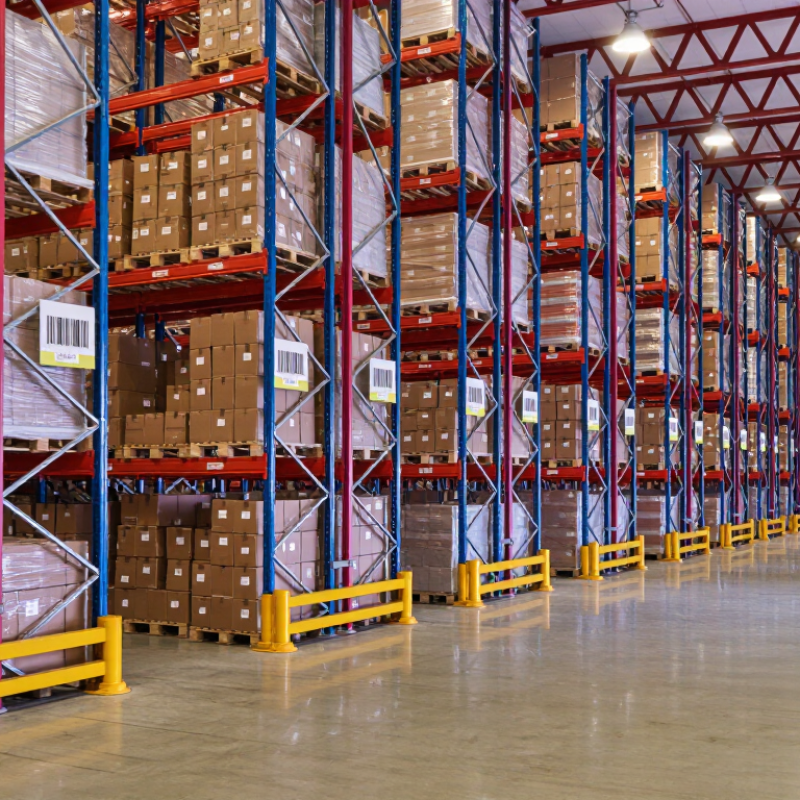
China Best Warehouse Rack Labels for Efficient Scanning?

Warehouse Rack Labels: Definition and Role in Efficient Scanning

Warehouse rack labels are identification tools placed on uprights, beams, aisles, and storage locations. They connect a physical rack position with a digital inventory record. A clear label usually includes a human-readable location code and a barcode. This combination supports faster scanning and reduces guessing during receiving, picking, and cycle counts. MHI’s 2024 Annual Industry Report found that 55% of respondents expected to increase technology and innovation investment. Better labels remain a practical part of that investment.

In daily warehouse work, scan distance and label placement matter. A label should face the normal travel path and remain visible from the operator’s position. High-contrast printing helps scanners read codes under uneven lighting. Durable materials also resist dust, abrasion, and changing temperatures. I have seen teams blame scanners when labels were simply too small or poorly positioned. That assumption deserves review. A perfect code cannot compensate for blocked sightlines or inconsistent location data. The process still needs trained staff and regular audits.

Tips:

  • Use one location format across every aisle.
  • Keep the largest code at eye level when possible.
  • Test labels with actual scanners, not only phone cameras.
  • Review damaged labels during each cycle count.

The 2023 Warehousing Vision Study reported that 76% of warehouse decision-makers considered modernization important, but modernization can begin with simple visibility improvements. Even so, label color standards may create confusion if workers rely on color alone. Use readable text and structured codes as the primary safeguards.

Key Features of High-Performance Rack Label Systems

High-performance rack labels begin with scan reliability, not decoration. A clear barcode needs strong contrast, a protected quiet zone, and enough size for the scanner’s working distance. Human-readable location codes should remain visible from the aisle floor. Small errors become expensive when workers stop, rescan, or enter locations manually.

Durability matters just as much. Labels face dust, forklift vibration, cold storage, glare, and repeated cleaning. Polyester or similarly resistant materials can protect printed data, but material choice should match the environment. Curved beams and reflective surfaces may still create scan failures. Test labels at actual rack height, lighting levels, and approach angles. Laboratory results are not enough.

The Zebra 2023 Global Warehousing Study reported that 73% of warehouse decision-makers planned to increase modernization investments by 2024. MHI’s 2024 Annual Industry Report also identified rising investment in automation and digital supply-chain tools. These figures support better identification systems, but a label alone cannot fix poor location data. GS1 guidance emphasizes consistent identification and data quality across supply chains. That principle should shape rack numbering, barcode structure, and WMS validation.

A useful system includes duplicate visual codes at aisle ends, protected edges, and replacement records. Scan distance should be measured, not guessed. I would also question oversized labels; they can improve visibility but reduce usable beam space. Some failures remain easy to miss. A weekly scan audit, using real equipment and ordinary operators, reveals more than a perfect installation photo.

Choosing the Best Materials, Formats, and Barcode Types

Choosing the best warehouse rack label starts with the working environment, not appearance. Polyester labels suit dusty aisles, forklift traffic, and occasional cleaning better than ordinary paper. Paper remains practical for short-term locations and controlled storage. No material survives every condition. I still see teams choosing glossy stock because it looks professional, then losing scans under fluorescent reflections.

Format matters during real movement. Use large, high-contrast labels at eye level, with human-readable location codes below the barcode. A 2024 MHI Annual Industry Report reported that 55% of supply-chain professionals planned to adopt robotics or automation within one to two years. That shift increases the need for consistent, machine-readable locations. Small labels create hesitation. Wide labels often scan faster from moving equipment. Leave clear blank space around each symbol.

Code 128 works well for compact alphanumeric rack addresses. QR codes can store more information, but extra data may encourage poor label design. GS1 guidance emphasizes adequate quiet zones, strong contrast, and correct symbol sizing. Test labels from the actual scanner distance. The 2023 Warehousing Vision Study reported that 69% of warehouse decision-makers expected rising operational demands, making dependable scanning increasingly important. Yet one test aisle is not enough. Check cold areas, damaged edges, angled scans, and low battery conditions. A label that passes perfectly on a clean workbench may fail beside a busy loading door. Calibration is often overlooked.

China Best Warehouse Rack Labels for Efficient Scanning? — Choosing the Best Materials, Formats, and Barcode Types

Barcode capacity is one practical factor when selecting rack labels. The chart compares standardized theoretical payload limits for common two-dimensional and stacked barcode formats. Actual performance also depends on label contrast, print quality, scanner distance, label material, and environmental exposure.

Material guidance: Paper labels are suitable for clean, dry indoor locations; synthetic polyester or polypropylene labels are better for moisture, abrasion, temperature changes, and chemical exposure. Use a compact barcode format for short rack IDs and a higher-capacity format when storing location, SKU, batch, or handling data in one symbol.

Designing Labels for Fast and Accurate Warehouse Scanning

Designing labels for fast and accurate warehouse scanning begins with the rack location, not the printer. A strong label should show the aisle, bay, level, and position in a consistent hierarchy. Use high-contrast black symbols on a matte white surface. Glossy film can reflect scanner light. Keep the barcode large enough for the longest scanning distance, and leave clear space around every symbol. GS1 guidance emphasizes quiet zones and consistent barcode structure because small layout errors can reduce reading reliability.

MHI’s 2024 Annual Industry Report states that 55% of supply chain leaders planned to increase technology investment within two years. That investment only works when labels support daily operations. In practical warehouse testing, operators should scan from normal travel lanes, under uneven lighting, and at different angles. A label that scans perfectly on a workbench may fail beside a metal rack. It happens. Labels for China warehouse projects should also match local location codes, language needs, and the warehouse management system.

Zebra’s 2023 Warehousing Study reported that 73% of decision-makers expected to modernize operations by 2024. This makes durable rack identification more important. Choose materials that resist dust, abrasion, temperature changes, and routine cleaning. Verify printed symbols against ISO/IEC 15415 or equivalent quality methods. Then test samples after installation, not only before shipping. I have seen teams place labels too high, forcing workers to twist scanners repeatedly. The design was technically correct, but operationally poor. Measure scan time, misreads, and replacement rates for several weeks. Perfect is rarely the first result.

Installation, Maintenance, and Performance Optimization

China Best Warehouse Rack Labels for Efficient Scanning?

Installation determines scanning reliability. Mount rack labels at consistent heights, usually between 1.4 and 1.7 meters. Keep them perpendicular to the main travel path. Use high-contrast print, matte surfaces, and protective covers near forklifts. Test each location with actual handheld scanners, not only a desktop printer. One hundred successful scans can reveal glare, distance, and obstruction problems. The 2024 MHI Annual Industry Report found that 55% of supply-chain leaders were increasing technology investment. That investment still fails when labels are poorly positioned.

Maintenance needs a simple routine. Inspect labels weekly for dust, peeling edges, fading, and impact damage. Replace damaged labels immediately. Record replacement dates and recurring failure points. During performance checks, compare scan time, read distance, and error rates by aisle. A practical target is consistent scanning within one attempt, though real warehouses rarely achieve perfection. Humidity, low light, and rushed picking can change results. I would not trust a label system without seasonal testing and operator feedback.

Tips: Keep spare labels near the maintenance station. Clean scanners before blaming labels. Avoid placing barcodes across seams or curved edges. Review failed scans monthly. If errors remain high, test larger symbols, stronger contrast, or a different mounting angle before changing the entire system.

FAQS

What are warehouse rack labels?

They identify rack positions, aisles, beams, and storage locations. Each label usually combines readable text with a barcode. This links physical space to digital inventory records.

How do rack labels improve warehouse scanning?

Clear labels reduce guessing during receiving, picking, and cycle counts. Workers can scan a location and confirm the matching inventory record. Small improvements matter.

Where should rack labels be installed?

Mount labels at consistent heights, usually between 1.4 and 1.7 meters. Face them toward the normal travel path. Keep important codes visible from the operator’s position.

What label design helps scanners read accurately?

Use strong contrast, matte surfaces, and readable location codes. Place the largest code near eye level when possible. Glossy surfaces may create glare.

Which materials protect rack labels?

Choose materials that resist dust, abrasion, humidity, and temperature changes. Protective covers help near forklift traffic. Avoid placing barcodes across seams or curved edges.

Should workers rely on label colors?

No. Use structured codes and readable text as primary safeguards. Color can support recognition, but lighting and personal interpretation may cause confusion.

How should warehouse teams test label performance?

Test every location with actual handheld scanners, not only phone cameras or printers. Check scan distance, glare, obstructions, and repeated read accuracy. Real conditions reveal more.

How often should rack labels be inspected?

Inspect them weekly for dust, fading, peeling edges, and impact damage. Review labels during every cycle count. Replace damaged labels immediately.

What should teams do when scanning errors remain high?

Clean the scanner before blaming the label. Then test larger symbols, stronger contrast, or a different mounting angle. The entire system may not need replacement.

Which measurements show whether labels work well?

Compare scan time, read distance, and error rates by aisle. A useful target is one successful scan per attempt. Warehouses rarely achieve perfection. Seasonal testing remains worthwhile.

Conclusion

Warehouse rack labels are essential tools for organizing storage locations and enabling fast, accurate barcode scanning. A well-designed labeling system clearly identifies aisles, bays, levels, and positions, helping workers locate inventory, reduce picking errors, and improve warehouse visibility. The best rack labels use durable, easy-to-read materials that withstand dust, abrasion, temperature changes, and frequent handling. Selecting the right format—such as large signs, beam labels, floor markers, or hanging identifiers—and pairing it with an appropriate barcode type can support reliable scanning from different distances and angles.

This guide explains How to label warehouse rack locations for efficient barcode scanning by focusing on clear layouts, strong contrast, logical location codes, and properly sized barcode symbols. It also covers practical installation methods, including consistent placement and secure attachment, as well as maintenance practices such as cleaning, inspection, and timely replacement. With thoughtful design and regular performance checks, warehouse rack labels can improve workflow speed, inventory accuracy, and long-term scanning efficiency.

Sienna

Sienna

Sienna is a skilled marketing professional with a deep expertise in our company’s core products and services. With a passion for innovation and detail, she plays a pivotal role in crafting insightful blog posts that not only highlight the unique features of our offerings but also provide valuable......