Choosing high-tolerance ASRS racking is not simply a matter of selecting stronger steel. It is a precision decision involving cranes, pallets, software, floors, and daily operating conditions. Why do automated warehouses prefer high-tolerance ASRS racking? The answer begins with control. Small deviations can cause shuttle vibration, misplaced pallets, slower retrieval, or unexpected stoppages. A rack upright may look straight to the eye, yet a crane operating several metres above the floor can detect the difference.
Professor Michael ten Hompel, a respected intralogistics researcher, has stated, “Intralogistics is the key to competitive production.” This principle applies directly to ASRS design. High-tolerance racking supports accurate storage positions and smoother crane movement. It also helps reduce impacts during load handling. Better alignment matters.
In practical projects, engineers check aisle width, rail levels, floor flatness, pallet dimensions, and rack deflection. They should also examine how tolerances change after installation. This point is often underestimated. Temperature, settlement, loaded beams, and repeated acceleration can influence performance. A specification that looks excellent on paper may still fail without careful measurement.
The right ASRS racking system should match the crane manufacturer’s limits and the warehouse’s actual loads. It must support inspection, maintenance access, fire protection planning, and future expansion. No rack is perfect forever. That reality deserves attention. A reliable selection process combines certified materials, documented manufacturing controls, installation surveys, and commissioning tests. These details create the stable geometry that automated warehouses need for safe, repeatable, and efficient operation.
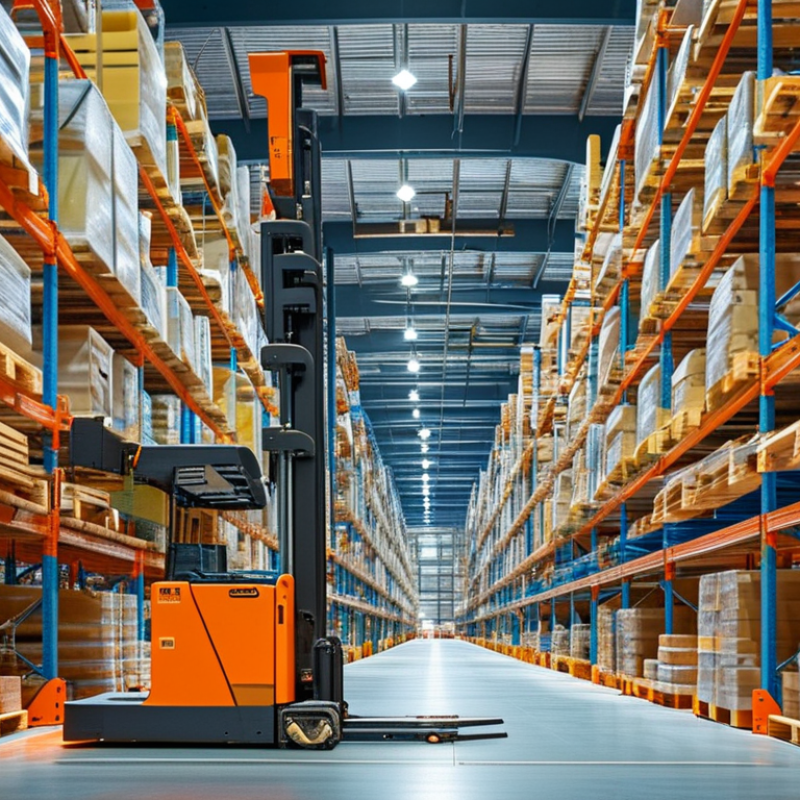
High-tolerance ASRS racking is engineered for precise automated storage and retrieval operations. It combines accurate rack geometry, stable connections, controlled deflection, and carefully aligned rails. Small dimensional errors can affect crane movement, pallet positioning, and inventory access. In a manual warehouse, a few millimeters may seem harmless. Automation is less forgiving.
These systems commonly serve high-bay pallet warehouses, tote storage areas, cold rooms, and distribution centers with frequent order movement. They help use vertical space while maintaining reliable access to each storage position. A practical assessment should examine floor flatness, rack height, load weight, aisle width, and equipment accuracy. Installation teams must verify anchor points and rail alignment before commissioning. Sensors and software also require testing with real load conditions.
Experience shows that tolerance is not only a rack specification. It depends on the building, floor, installation quality, and maintenance plan. A very rigid design may still perform poorly on an uneven slab. That detail is often underestimated. Regular inspections can reveal loose connections, damaged uprights, or changing floor conditions. Engineers should review these findings against the original design limits. Perfect performance is difficult to guarantee, especially in demanding environments. Careful measurement, realistic loading tests, and honest review usually produce better results than choosing the tightest number on a technical sheet.
| Selection Dimension | High-Tolerance ASRS Racking Definition | Typical Engineering Data | Suitable Warehouse Applications | Practical Selection Guidance |
|---|---|---|---|---|
| System Type | Racking designed and installed to maintain tighter dimensional accuracy than conventional static pallet racking, allowing automated storage and retrieval equipment to operate safely within narrow storage aisles. | Common systems include aisle-based pallet crane ASRS, mini-load ASRS, shuttle-based ASRS, and robotic carton storage. | High-density pallet storage, e-commerce fulfillment, cold storage, manufacturing components, spare parts, and finished-goods warehouses. | Match the rack type to the load unit, throughput requirement, building height, temperature range, and required storage density. |
| Load Capacity | Each rack position must be engineered for the actual pallet weight, load distribution, handling impact, and required safety factor. | Typical pallet loads range from approximately 500 to 1,500 kg per storage position; heavier-duty designs may support more. | Uniform palletized goods, packaged food, beverages, automotive parts, industrial materials, and other unit-load products. | Use the maximum real operating load, not the average load. Consider uneven pallets, concentrated loads, and future inventory changes. |
| Rack Height | Vertical rack geometry must remain stable and accurately aligned so the storage and retrieval machine can access every level without interference. | Typical automated pallet racks are approximately 8–30 m high, depending on building structure, equipment reach, fire protection, and local regulations. | Distribution centers and production warehouses where vertical volume is available and land use must be minimized. | Check clear height, roof structure, sprinkler requirements, seismic conditions, maintenance access, and emergency egress before selecting rack height. |
| Aisle Width | Narrow, accurately controlled aisles reduce wasted floor area while providing sufficient clearance for the crane, shuttle, or robotic handling system. | Automated pallet-crane aisles are often about 1.0–1.8 m wide; the final value depends on load dimensions and machine design. | High-density pallet warehouses, temperature-controlled storage, and facilities with expensive or limited floor space. | Calculate clearance from the largest pallet, pallet overhang, load deformation, machine deflection, and required operating speed. |
| Floor Flatness and Levelness | The building floor and rail foundation must provide a stable, level, and accurately aligned running surface for automated equipment. | Many automated systems require tighter flatness and levelness controls than ordinary forklift aisles; project limits are commonly specified in millimeters over defined measuring distances. | Very-narrow-aisle ASRS, high-bay crane systems, shuttle systems, and warehouses with long travel distances. | Specify floor tolerances during the building design stage. Survey the slab before rail installation and correct deviations before commissioning. |
| Rack Plumbness and Alignment | Columns, beams, rails, and guide components must remain within controlled vertical and horizontal alignment limits to prevent collisions and positioning errors. | Typical projects use millimeter-level installation controls, with tighter limits applied to crane rails, guide rails, and transfer interfaces. | Deep-lane pallet storage, multi-level mini-load systems, and high-speed automated warehouses. | Require dimensional inspection after erection, after rail installation, and after loading. Recheck alignment if the building settles or operating impacts occur. |
| Pallet and Load-Unit Quality | High-tolerance racking performs reliably only when pallets and containers have consistent dimensions, adequate stiffness, and undamaged support surfaces. | Common pallet footprints include 1,200 × 800 mm and 1,200 × 1,000 mm; allowable dimensional variation must be defined for the selected equipment. | Standardized pallets, totes, trays, cartons, drums, and production containers handled automatically without manual correction. | Set inspection rules for pallet condition, bottom-board layout, load overhang, total height, center of gravity, and maximum deformation. |
| Operating Temperature | Materials, sensors, lubricants, batteries, and control systems must maintain performance across the warehouse temperature range. | Ambient systems commonly operate near 5–35 °C; chilled and frozen facilities require specially selected components and installation procedures. | Ambient distribution, chilled food storage, frozen food storage, pharmaceuticals, and temperature-sensitive manufacturing inventory. | Account for thermal contraction, condensation, floor behavior, corrosion protection, battery performance, and maintenance access in cold environments. |
| Throughput Requirement | The racking layout must support the required inbound, storage, replenishment, and outbound movements without creating bottlenecks. | Throughput is normally stated as pallet or tote movements per hour and depends on travel distance, lift height, dwell time, and equipment quantity. | Order fulfillment centers, cross-docking support, production line supermarkets, and high-volume distribution operations. | Use peak-hour demand, not daily averages. Model simultaneous inbound and outbound activity, buffering, replenishment, and recovery from equipment downtime. |
| Safety and Compliance | The rack, floor, automation equipment, guarding, fire protection, and operating controls must be designed as one coordinated system. | Design review should consider applicable local building codes, fire codes, seismic requirements, rack standards, machine safety rules, and electrical regulations. | All automated warehouses, especially high-bay, seismic, cold-storage, and facilities handling regulated or hazardous materials. | Obtain structural calculations, equipment risk assessments, fire engineering approval, load signage, inspection procedures, and operator training before use. |
| Inspection and Maintenance | High-tolerance systems require scheduled checks because small changes in alignment, impact damage, or floor movement can affect automated positioning. | Recommended controls include routine visual checks, periodic dimensional surveys, sensor testing, fastener inspection, and documented damage reporting. | Continuous-operation distribution centers, unmanned or lightly staffed warehouses, and facilities with high equipment utilization. | Choose a design with accessible inspection points, replaceable protective components, clear maintenance zones, and documented tolerance limits. |
Record gross weight, load distribution, and stacking conditions for every pallet type. Do not use average weight alone. A few heavy pallets can increase beam deflection and column stress. Moving loads may behave differently from static loads. A qualified structural engineer should confirm safety factors.
Measure pallet length, width, height, and overhang during real operations. Wooden pallets may vary by several millimeters. Damaged boards can create uneven support. Measure twice. Treating dimensions as fixed data can cause layout failures.
Check clearances between pallets, beams, guides, rails, and handling equipment. Too much space wastes storage capacity. Too little space may cause contact during movement. Clearances should match equipment speed and load behavior. The smallest gap matters.
Review storage density, retrieval speed, aisle width, conveyor height, and fire protection. Design for peak traffic, not only normal shifts. Consider future product changes and mixed loads. Rejected pallets also need a clear handling process. Normal shifts can mislead.
Leave service zones for inspections, alignment checks, repairs, and emergency access. A dense layout may look efficient but reduce usable capacity. Blocked access can delay repairs. Human decisions are not always perfect. Plan for that.
Survey floor flatness, rack plumbness, rail straightness, and beam deflection. Use laser tools for vertical and horizontal alignment. Record measurements at every bay, not only at the ends. Check anchor locations twice. The floor disagrees sometimes.
High-strength steel may reduce upright sizes while supporting heavy pallet loads. Cold-formed sections need careful checks around punched connections. Hot-rolled members can provide greater rigidity in demanding zones. Single-deep layouts usually simplify access and load control. Double-deep designs require tighter alignment.
Test representative loads before full installation. Confirm crane rail tolerances, aisle clearances, transfer positions, and allowable rack movement. Coordinate racks, rails, sensors, conveyors, barriers, and control software. Inspect again after loading, because steel may settle slightly. Small errors multiply.
Choosing high-tolerance ASRS racking begins with understanding how automated storage and retrieval systems operate in demanding warehouse environments. These racks are engineered to maintain precise dimensions, stable alignment, and reliable load support, making them suitable for pallet storage, high-density facilities, and fast, repetitive material handling. Why do automated warehouses prefer high-tolerance ASRS racking? Greater dimensional accuracy helps robotic equipment position, retrieve, and transfer pallets consistently while reducing interference, product damage, and system downtime.
A proper selection process should evaluate pallet sizes, load weights, turnover rates, aisle clearances, equipment reach, and future capacity needs. Buyers should also compare structural designs and materials for strength, durability, corrosion resistance, and compatibility with conveyors, cranes, and control systems. Tolerance requirements must support automation accuracy without compromising safety. Finally, installation quality is essential: level floors, accurate assembly, secure anchoring, and careful inspection help maintain performance. A practical maintenance plan, periodic alignment checks, and adaptable components can further improve reliability and extend the racking system’s service life.

 Lush Rack