Choosing the right pallet storage system can shape daily productivity, safety, and long-term warehouse cost. The decision is rarely as simple as selecting the system with the highest storage density. In practice, aisle width, forklift reach, pallet turnover, SKU variety, and building height all matter. A system that performs well in a cold-storage facility may fail in a fast-moving distribution center.
For anyone asking, “How to choose between selective racking and double-deep racking,” warehouse consultant Dr. Edward H. Frazelle offers a useful principle: “Warehouse design should begin with the requirements of the operation, not with the equipment.” That idea keeps the discussion grounded. Selective racking gives direct access to every pallet and supports many SKUs. Double-deep racking stores more pallets within a smaller footprint, but it reduces immediate access and usually requires specialized reach equipment. That trade-off is easy to underestimate.
This guide examines five practical decision points, including inventory rotation, storage density, handling equipment, labor flow, and future growth. Picture a forklift operator retrieving a rear pallet during a busy afternoon shift. Extra travel, repositioning, or product shuffling can quietly increase operating time. Yet a warehouse with stable inventory and limited floor space may accept that compromise. There is no perfect answer. Even experienced planners can overlook seasonal peaks, damaged pallets, or changing order profiles. The best choice comes from measured data, site observation, and a willingness to question initial assumptions.
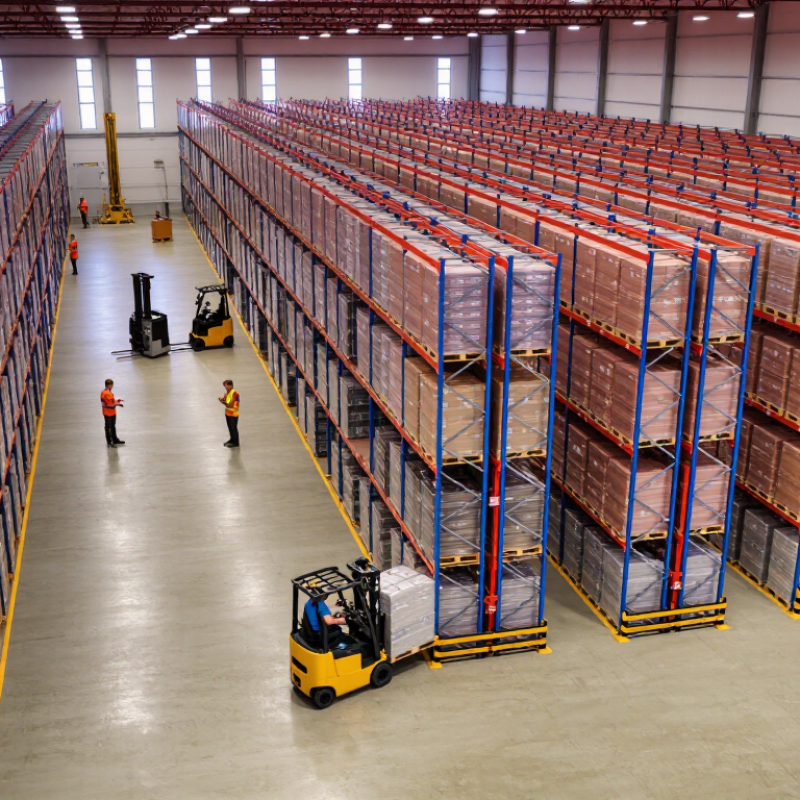
Start with pallet dimensions, load weights, and available floor space. Record the tallest and heaviest loads separately. This prevents a common mistake: selecting storage equipment by aisle appearance alone. Selective racking suits many product types and offers direct access to every pallet. Double deep racking stores more pallets in less aisle space, but access becomes less immediate.
Fast-moving products often need direct access near picking areas. Selective racking can reduce travel time when workers handle mixed orders daily. Double deep racking may work better for larger quantities of identical goods. It is useful when pallets remain stored for longer periods. However, retrieval equipment must reach the rear pallet safely. That detail is easy to overlook.
If pallet sizes vary greatly, selective storage usually provides more flexibility. If inventory is stable, uniform, and managed by batch, double deep storage may improve capacity. Use inventory records, not assumptions. Review seasonal peaks, damaged pallets, and expected growth. I have seen layouts fail because future changes were treated as unlikely. A small trial zone can reveal access problems before a full installation. Ask whether workers can identify, inspect, and remove the correct pallet without confusion. Safety clearances, floor capacity, and equipment specifications also require professional verification.
Choosing between selective and double deep racking starts with inventory behavior, not floor plans. Selective racking gives every pallet direct access, making it suitable for many SKUs and frequent picking. Double deep stores two pallets in one bay depth, reducing aisle demand and increasing pallet positions. Engineering layouts often show 25–40% higher storage density, but access becomes less convenient.
Check five points carefully. Review SKU count, pallet turnover, loading equipment, ceiling height, and fire-safety clearances. A 2024 Material Handling Industry report found that 55% of surveyed companies planned to increase technology investment. That trend matters because double deep systems usually require better location control and disciplined replenishment. They also need reach trucks with suitable fork extension and lift capacity.
Selective systems support FIFO more naturally. Double deep structures often work better with stable products and limited SKU variation. The wrong choice creates hidden labor. Operators may move the front pallet before reaching the rear one. Small delay, repeated hundreds of times.
Racking must follow engineered specifications, including beam capacity, frame protection, anchoring, and load signage. ANSI MH16.1 provides recognized design guidance for steel industrial storage racks. Still, a report cannot replace a site survey. Measure actual pallet dimensions, aisle turning paths, sprinkler positions, and floor conditions. I have seen attractive density calculations fail because one oversized pallet blocked an entire bay. That mistake deserves attention.
5 Tips for Choosing Selective or Double Deep Racking
Evaluate the clear floor area before choosing a rack type. Selective racking uses more aisles but gives direct access to every pallet. Double deep racking stores pallets behind one another, increasing density and reducing unused aisle space. Measure twice. A warehouse with narrow columns, sprinkler lines, or uneven floors may not support the expected layout.
Review product movement and access requirements. Selective racking suits operations with many stock keeping units and frequent picking. Double deep racking works better when several pallets share the same product and rotation is predictable. Accessibility matters. Check forklift reach, turning radius, beam height, and pallet condition. A layout that looks efficient on paper can become slow during a busy shift. I have seen teams ignore this practical test, then lose time at every retrieval.
Compare storage density with inventory accuracy. Double deep systems can reduce travel distance and improve cubic utilization, but they require disciplined location control. Older pallets may block newer ones, especially when stock rotation is inconsistent. Define loading limits, inspection routines, and safe operating clearances with a qualified storage professional. Do not assume maximum capacity equals practical capacity. Leave room for damaged pallets, maintenance access, and future growth. The best choice may be a mixed layout, although that can complicate training and supervision. That trade-off deserves honest review.
Choosing selective or double deep racking requires more than comparing storage density. Review equipment requirements, safety, and operating costs together.
Tip 1: Match the rack to inventory movement. Selective racking offers direct access to every pallet. Double deep racking stores more pallets, but it needs reach-truck equipment and disciplined load sequencing. A warehouse with frequent stock rotation may lose productivity when operators move the front pallet first.
Tip 2: Measure safety conditions on the actual floor. Check aisle width, rack height, floor capacity, lighting, and pedestrian routes. OSHA reports that powered industrial trucks cause about 35,000 serious injuries annually in the United States. Clear visibility matters. So does training. A rushed layout can create hidden collision points.
Tip 3: Calculate the complete operating cost. Include truck purchase or rental, battery charging, maintenance, labor time, inspections, and rack protection. MHI’s 2024 Annual Industry Report identified labor and talent shortages as a major challenge for warehouse operations. Higher density may reduce expansion needs, but it can increase handling time.
Tip 4: Test future demand, not only today’s volume. Use twelve months of shipment data and seasonal peaks.
Tip 5: Run a small layout trial before installation. Measure pallet retrieval time and near-miss observations. The spreadsheet may look perfect. The floor may disagree. A modest access compromise can become expensive when product sizes change.
Select the racking system that fits your warehouse strategy, not just your available floor space. Selective racking gives direct access to every pallet, making it practical for mixed SKUs, frequent picking, and strict stock rotation. Double deep racking stores pallets two positions deep. It increases storage density but reduces immediate access and may require specialized handling equipment. It suits warehouses with fewer SKUs and larger pallet quantities.
Review SKU count, pallet volume, order frequency, and replenishment patterns. The MHI 2024 Annual Industry Report found that 83% of supply chain professionals planned technology investment within two years. That signals a wider shift toward data-led warehouse decisions. Still, software cannot fix a poor storage layout.
Double deep systems can reduce aisles and use vertical space more effectively. However, they often operate with a last-in, first-out pattern unless carefully managed. Selective racking may occupy more space, but workers can reach each pallet faster. Time matters.
Check turning radii, rack clearances, floor loading, and emergency access.
Model three demand scenarios, including seasonal peaks.
Ask whether future SKU growth will make double deep positions restrictive.
A 2024 report from the Council of Supply Chain Management Professionals highlights continued pressure on fulfillment speed and inventory responsiveness. That pressure can expose an overly dense design. Erotidke?
Selective racking suits warehouses with many SKUs and frequent pallet picking. Every pallet remains directly accessible. Fast access matters.
Double deep racking suits stable products, fewer SKUs, and larger pallet quantities. It stores two pallets behind one another. Density increases.
Double deep layouts may provide roughly 25–40% more storage density. Actual results depend on columns, aisles, ceilings, and pallet sizes.
Review SKU count, pallet volume, order frequency, turnover, and replenishment habits. Predictable inventory supports deeper storage. Mixed inventory may not.
Yes, selective racking naturally supports FIFO because workers reach each pallet directly. Double deep storage can delay older pallets behind newer ones.
Check forklift reach, fork extension, lift capacity, turning radius, and aisle clearance. A paper layout may fail during a crowded afternoon shift.
Measure clear floor space, ceiling height, pallet dimensions, sprinkler locations, columns, floor conditions, and emergency routes. Measure twice.
It can reduce travel and aisle demand. However, workers may move a front pallet first. Small delays become costly after hundreds of retrievals.
Confirm beam capacity, frame protection, anchoring, load signs, inspection routines, and operating clearances. Maximum capacity is not always practical capacity.
A mixed layout can combine direct access with higher density. It may also complicate training and supervision. That trade-off deserves honest review.
Choosing the right pallet racking system begins with a clear understanding of your warehouse’s storage needs and inventory characteristics. Consider pallet quantities, product turnover, SKU variety, load dimensions, and how often goods must be accessed. How to choose between selective racking and double-deep racking depends largely on these factors. Selective racking provides direct access to every pallet and is well suited to warehouses with many SKUs or frequent picking requirements, while double-deep racking increases storage density by placing pallets two positions deep, making it more suitable for larger quantities of fewer product lines.
You should also compare layout efficiency, accessibility, equipment requirements, safety procedures, and long-term operating costs. Double-deep systems may require specialized handling equipment and careful inventory planning, whereas selective systems generally offer simpler access and operation. By balancing space utilization, workflow efficiency, budget, and future growth, you can select a racking strategy that supports reliable warehouse performance and makes the best use of available space.

Lush Rack