Heavy-duty warehouse shelving rarely fails without warning. Small clues matter. A beam may sag slightly, connections may loosen, or upright frames may lean after repeated impacts. Scraped paint can expose deeper corrosion, especially near damp floors and loading areas. These details deserve attention before damage becomes a serious operational risk.
What are the main signs of fatigue in heavy-duty warehouse shelves? Typical indicators include permanent beam deflection, cracked welds, distorted uprights, stretched bolt holes, and recurring damage around connectors. Uneven pallet loading can accelerate stress. Forklift contact may also create hidden deformation that looks minor from one aisle. Experienced warehouse teams should compare current conditions with installation photographs, inspection records, and the shelving manufacturer’s technical guidance. Records reveal patterns.
A careful assessment should consider both visible damage and repeated loading history. Fatigue can develop gradually, even when shelves appear clean and stable. A qualified inspector may measure beam deflection, check frame plumbness, and examine joints closely. Visual checks alone are useful, but they are not conclusive. Do not guess. Isolate visibly damaged sections, control access, and arrange a competent evaluation before continued use. The inspection process itself may be imperfect; lighting, obstructed pallets, and rushed checks can hide important evidence. That limitation deserves honest recognition. Reliable maintenance combines trained observation, documented findings, sensible load control, and timely repairs or replacement decisions. This article outlines practical warning signs while encouraging readers to verify conclusions against site-specific conditions and professional advice.
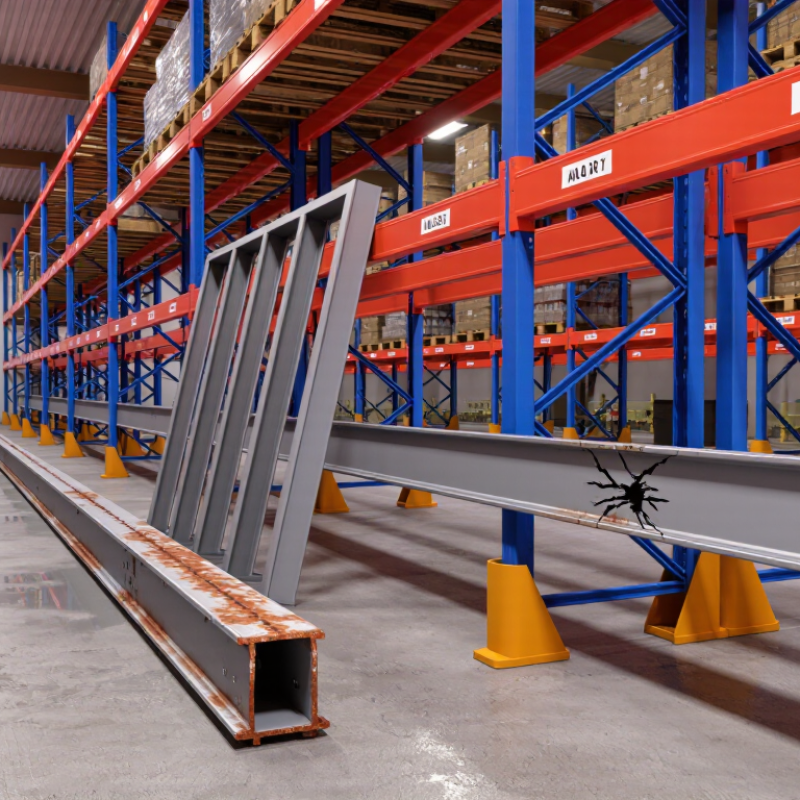
Fatigue in heavy-duty shelving often develops quietly, before a beam shows an obvious bend. During routine checks, look for hairline cracks near welds or beam connectors. Flaking paint around a joint can expose movement or repeated rubbing. Small changes matter. Note whether connector locks sit fully in place and whether upright frames remain straight.
Watch for beams that sag more than neighboring beams, even when their loads appear similar. Dents, twisted uprights, loose anchors, or newly uneven gaps between components deserve attention. Listen, too: a fresh creak during ordinary loading may signal movement, though noise alone cannot confirm damage. A quick glance can miss hidden stress. That limitation is worth remembering.
Keep dated inspection notes and photos from consistent angles; gradual changes are easier to spot side by side. Compare conditions with the shelving maker’s load guidance, and never assume a familiar-looking rack is safe. If a crack, deformation, or shifting connection appears, keep people clear and prevent further loading in that area. Have a qualified shelving professional assess it before use resumes. Avoid hammering parts back into place; that can hide evidence or worsen the damage.
| Warning sign | What to look for | Why it matters | Recommended response |
|---|---|---|---|
| Cracks in structural members | New or growing cracks around beam ends, upright holes, welds, or connection points. | Cracks can indicate stress damage and may reduce the capacity of a beam or upright. | Keep people clear of the affected area, unload only when it can be done safely, and arrange an assessment by a qualified rack professional. |
| Permanent bending or bowing | A beam or upright remains visibly bent, twisted, or out of line after loading conditions change. | Deformation may result from impact, overloading, or repeated stress; visible distortion can affect stability and load capacity. | Do not attempt to straighten or repair structural members in place. Restrict access and have the damage evaluated against the rack manufacturer’s criteria. |
| Loose or damaged connections | Dislodged beam connectors, missing or damaged locking devices, loose bolts, or visibly opened joints. | Connections transfer loads between components. A compromised connection can allow a beam to disengage or a frame to become unstable. | Isolate the affected bay and have the correct compatible parts installed and checked by a competent person. |
| Repeated damage at the same location | Recurring dents, scrapes, or deformation on the same upright, beam, or connection. | Repeated impacts or concentrated loading can progressively damage a member even if each incident appears minor. | Record the location, inspect the surrounding structure, and address the cause, such as vehicle clearance, handling practices, or load placement. |
| Corrosion or material loss | Flaking rust, pitting, deep corrosion, or thinning metal, especially near joints, baseplates, or damp areas. | Corrosion can reduce the effective cross-section of a member and weaken load-bearing connections. | Investigate the source of moisture or chemical exposure and obtain a qualified inspection before relying on affected components. |
| Changes in alignment or stability | Frames appear out of plumb, bracing is distorted, baseplates have shifted, or anchors appear loose or damaged. | Misalignment or movement can affect how loads are distributed and may signal damage to the frame, floor fixings, or anchorage. | Keep the area clear if stability is in doubt. Have the installation, anchors, and floor conditions checked by a qualified professional. |
| Unusual noises or movement | New cracking, popping, or scraping sounds, or noticeable movement during normal loading or unloading. | These signs can have several causes, including loose connections, impact damage, or movement in the structure; sound alone does not identify the cause. | Stop nearby operations if the rack seems unstable and arrange an inspection. Do not test the structure by adding or shifting loads. |
| Loads no longer sit evenly | Pallets or stored items tilt, bear unevenly, or no longer sit securely on the intended supports. | Uneven support can concentrate forces and may point to damaged beams, misplaced components, or an unsuitable load arrangement. | Follow safe handling procedures to remove or reposition the load, then inspect the rack and verify load placement and posted capacity information. |
Inspection note: Compare findings with the rack manufacturer’s specifications and applicable workplace requirements. Do not rely on a single visual sign to determine safe capacity; damaged or suspect shelving should be assessed by a competent, qualified person.
Look for hairline cracks near welds, connectors, and load-bearing joints. Flaking paint may reveal repeated rubbing or movement. Small changes matter.
A beam sagging more than nearby beams deserves attention, even under similar loads. Compare it with an undamaged section. One quick glance may miss hidden stress.
Inspect for bowed columns, twisted profiles, dents, and new leaning. Diagonal braces should sit flat. Base plates should remain firmly seated.
A new creak during ordinary loading may signal movement. Noise alone cannot confirm damage. Still, do not dismiss it casually.
Check for loose anchors, elongated bolt holes, and connector locks that do not fully engage. Uneven gaps can show shifting. The cause may be unclear at first.
A small dent near a connector can weaken a critical area. Repeated impacts may loosen beam connections. Damage can look minor but still reduce confidence.
Keep people away from the affected bay and stop further loading. Do not hammer parts straight. That may hide damage or make it worse.
Keep dated notes and photos from consistent angles. Compare the same joint, beam, and base plate over time. Photos help, though they are not a complete assessment.
Arrange a qualified shelving professional’s assessment before using damaged areas again. Visual checks cannot confirm remaining capacity. Waiting for a dramatic bend is risky.
Fatigue in heavy-duty shelving often develops gradually as repeated loading and unloading places stress on beams, uprights, braces, and connections. What are the main signs of fatigue in heavy-duty warehouse shelves? Look for beams that sag or twist, upright frames that lean or buckle, cracked or stretched connections, loose fasteners, and damaged welds. Changes in the fit of beam connectors or visible gaps at joints may also indicate that components are weakening.
These changes can reduce a shelf’s ability to carry loads and increase the risk of falling materials or structural failure. Regular inspections should check for deformation, cracks, corrosion, shifting, and unusual movement, with particular attention to heavily used areas and connection points. If damage or instability is found, keep the affected section unloaded and arrange a qualified assessment before returning it to service. Early detection and consistent checks help prevent minor wear from becoming a serious safety concern.

 Lush Rack