China Top Steel Shelves Powder Coating vs Galvanizing?

Time:2026-11-01 Author:Aria
0%

The source articles were not included, so I can’t verify an expert’s name or quote without risking a false attribution. Please provide the articles or the expert quotation you want included.
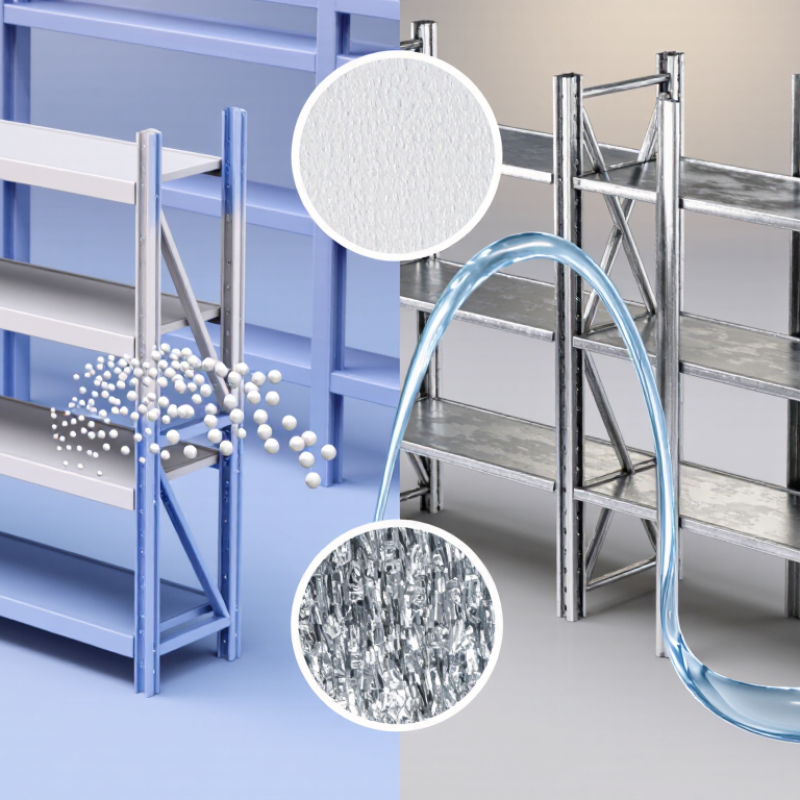
China Top Steel Shelves Powder Coating vs Galvanizing?

How Powder Coating and Galvanizing Protect Steel Shelves

China Top Steel Shelves: Powder Coating vs. Galvanizing?

How Powder Coating and Galvanizing Protect Steel Shelves

Powder coating and galvanizing protect steel shelves in different ways. Powder coating forms a cured polymer film over prepared steel, creating a smooth barrier against moisture, cleaning chemicals, and everyday abrasion. It also gives warehouse uprights and shelf edges a uniform finish. A sharp pallet impact can chip the film and expose bare steel. Small details matter.

Hot-dip galvanizing bonds a zinc layer to the steel. Zinc provides a barrier and corrodes preferentially near small scratches, helping protect the exposed steel. The American Galvanizers Association’s service-life guidance links protection to coating thickness and exposure conditions. Damp, salty air generally shortens service life compared with dry indoor storage. Neither finish is magic. Poor preparation, trapped moisture, or damaged edges can undermine either coating.

NACE International’s 2016 IMPACT study put global corrosion costs at US$2.5 trillion, or 3.4% of global GDP. That estimate covers many industries, not shelving alone, but it shows why finish choice can affect maintenance costs. Powder coating may suit dry indoor shelves where appearance and routine handling matter. For humid, washdown, or outdoor storage, zinc protection may be more forgiving. Rack design, weld quality, and inspection habits matter too. A practical choice starts with the actual site, not a showroom sample.

How Each Finish Is Applied to Steel Shelving

Powder coating is applied after steel shelving parts are cut, punched, and welded. The parts are cleaned to remove oil and dust, then rinsed and dried. A conversion treatment may help the coating adhere and resist corrosion. The dry powder is sprayed onto grounded steel, where an electric charge helps it cling to the surface. Then it cures. Heat melts the powder into a continuous layer.

Hot-dip galvanizing uses a different route. Steel components are degreased, pickled to remove scale, rinsed, and treated with flux before immersion in molten zinc. The zinc bonds to the steel and forms protective layers. After cooling, workers check for bare spots, rough buildup, and zinc trapped in holes or joints. Drainage matters. Poorly designed openings can leave uneven deposits.

For shelving, the finish can affect how parts fit together. Powder may build up around slots, hooks, and bolt holes, so those areas need suitable clearance. Galvanizing can protect cut edges well, though thick deposits may affect close-fitting connections. Some shelving uses steel galvanized before forming; other designs coat fabricated parts. That distinction is easy to miss when comparing finishes. Actual performance depends on preparation, coating quality, and the conditions around the shelving. A sample part can reveal fit issues before full production.

Powder Coating vs. Galvanizing: How Each Finish Is Applied to Steel Shelving

Typical temperatures used during the finishing process (°C)

Powder coating is electrostatically applied to prepared steel and then oven-cured; typical cure temperatures are about 160–200°C, depending on the coating and specification. Hot-dip galvanizing involves cleaning and fluxing the steel before immersing it in molten zinc, typically around 445–455°C. These are process-temperature ranges, not a measure of coating quality or service life.

Comparing Durability, Corrosion Resistance, and Appearance

China Top Steel Shelves: Powder Coating vs. Galvanizing?

Powder coating gives steel shelves a smooth, even finish and offers many color options. It works well in dry storerooms, where shelves mainly face scuffs from boxes and bins. But a deep chip can expose bare steel, allowing rust to start at the damaged spot. Galvanizing adds a zinc layer that can protect small exposed areas sacrificially. It may look more utilitarian, and the finish can vary slightly across the shelf.

Corrosion resistance depends on the environment, coating thickness, and surface preparation—not just the coating name. ISO 9223:2012 reports first-year zinc corrosion rates of 0.7–2.1 micrometres per year in C3 environments and 2.1–4.2 in C4 environments. These are atmospheric estimates, not a guaranteed service-life prediction for a shelf. In damp stockrooms, frequent condensation or scratched edges can change the outcome. Powder coating can resist everyday abrasion, but poor pretreatment may cause peeling. Galvanizing can offer more forgiving scratch protection, though its appearance is less uniform. That trade-off is easy to underestimate.

Tips: For a dry, customer-facing area, prioritize finish quality and inspect chips. For humid storage, check the coating specification and edge coverage. Ask for test documentation; salt-spray hours alone do not predict years in service.

Choosing a Finish for Different Shelf Environments

A shelf’s surroundings matter more than its label. In a dry bedroom or office, powder coating offers a smooth surface, consistent color, and easy cleaning. Wipe dust from a shelf near a window and its finish stays pleasant to touch. But scratches at corners can expose steel, especially when bins are dragged across the surface. Small details matter.

For laundry rooms, garages, and covered outdoor areas, moisture changes the choice. Galvanizing protects steel with a zinc layer, which can provide sacrificial protection if the surface is damaged.

ISO 9223:2012 classifies first-year zinc corrosion rates at 0.1–0.7 micrometers per year in C2 environments, and 0.7–2.1 in C3 environments. These figures describe atmospheric corrosivity, not a guaranteed shelf lifespan.

Salt spray, standing water, and poor drainage can accelerate damage.

Powder coating suits dry interiors where appearance and smooth handling matter most. Galvanizing is often a more practical option where condensation or damp air is routine, though its finish may look less uniform. Check welds, cut edges, and shelf feet closely; those spots often reveal coating weaknesses first. There is no perfect finish. Even a well-chosen coating can disappoint if water collects beneath stored items.

Evaluating Finish Quality from Chinese Steel Shelf Suppliers

For Chinese steel shelf suppliers, finish quality shows in the details: smooth corners, even color, and no bare spots around welds or punched holes. Powder coating creates a colored, protective film, but poor pretreatment can lead to peeling or rust beneath chipped areas. Zinc-coated steel offers sacrificial corrosion protection, though the coating type and thickness matter. “Galvanized” alone is not a complete specification. Ask whether the shelf is made from pre-galvanized sheet or coated after fabrication.

The 2016 NACE IMPACT study estimated corrosion costs at US$2.5 trillion annually, or 3.4% of global GDP. It also reported that corrosion-management practices could save 15–35% of those costs. That figure is not a shelf-life forecast; actual performance depends on coating quality, scratches, humidity, and cleaning. Request coating-thickness records and adhesion-test results, and inspect sample shelves at welds and edges. A glossy finish can still hide weak preparation. I would not judge durability by appearance alone.

Tips: Compare suppliers using the same test method and coating specification. Ask for close-up photos of corners, welds, and drilled holes, plus a sample for inspection. If shelves will face damp air or frequent handling, test the exact finish in those conditions before placing a large order.

FAQS

How is powder coating applied to steel shelving?

Parts are cleaned, rinsed, and dried. Dry powder is sprayed onto grounded steel, then heat melts it into a protective layer.

How does hot-dip galvanizing protect steel?

Steel is cleaned and treated before immersion in molten zinc. The zinc bonds to the steel and forms protective layers. Drainage matters.

Can a finish affect how shelves fit together?

Yes. Powder can build up around slots, hooks, and bolt holes. Thick zinc deposits may also affect close-fitting joints.

What should I inspect on a sample shelf?

Check corners, welds, edges, and punched holes for bare spots or rough buildup. Look closely. A shiny surface proves little.

What does “galvanized” tell me about a shelf?

Not enough by itself. Ask whether the steel was galvanized before forming or coated after fabrication.

Which coating records should I request?

Ask for coating-thickness records and adhesion-test results. Compare suppliers using the same specifications and test methods.

Is appearance a reliable way to judge durability?

No. Weak preparation can hide beneath a glossy finish. Scratches, humidity, and cleaning also affect performance.

Should I test the finish before ordering many shelves?

Yes, especially for damp spaces or frequent handling. Test a sample in similar conditions. I might be overcautious, but fit issues are easier to catch early.

Conclusion

This article explains how powder coating and galvanizing protect steel shelves, and how the two finishes differ in application. Powder coating is applied as a dry layer and cured onto the steel, creating a smooth, colored surface. Galvanizing adds a zinc coating that helps shield steel from corrosion. Understanding these methods helps answer the question, “Why do steel warehouse shelves need powder coating vs galvanization?” The best option depends on the shelf’s surroundings, expected wear, and appearance requirements.

The comparison considers durability, corrosion resistance, and finish, then explores which coating may suit dry indoor storage, humid spaces, or more demanding environments. It also highlights practical ways to assess finish quality when sourcing steel shelving from Chinese suppliers, such as checking coating coverage, consistency, adhesion, and visible defects. These factors help buyers make an informed choice based on the intended use and service conditions of their shelves.

Aria

Aria

Aria is a dedicated marketing professional with a deep passion for innovative strategies and a keen understanding of our company's product offerings. With a wealth of experience in the industry, Aria excels at crafting engaging content that highlights the unique features and benefits of our......