Why is push-back racking ideal for LIFO inventory systems? The answer begins with controlled access, not maximum storage alone. Push-back racks place pallets on nested carts or inclined rails, allowing operators to load and retrieve goods from one aisle. Each lane usually stores one SKU, with the newest pallet remaining closest to the aisle. This arrangement supports last-in, first-out movement while reducing forklift travel and wasted floor space.
Warehouse consultant David E. Mulcahy explains the principle clearly: “A well-designed storage system should match product flow, handling equipment, and operating discipline.” That point matters here. Push-back racking can hold several pallets deep, often two to six positions, depending on the design. A forklift loads a new pallet and gently pushes older pallets backward. When the front pallet leaves, the next pallet rolls forward. The sequence is visible and practical.
It is not a magic fix. Product demand, pallet quality, lane depth, and forklift training still influence performance. Damaged pallets may move poorly. Mixed SKUs can also weaken inventory accuracy. A careful warehouse assessment should confirm whether LIFO matches product characteristics and order patterns.
In a busy distribution center, the difference is easy to picture. One aisle stays open. Pallets sit compactly behind one another. Operators spend less time searching and more time moving confirmed stock. With clear labels, routine inspections, and accurate records, push-back racking becomes a reliable tool for LIFO inventory systems. Its value comes from alignment: storage depth supports the flow, rather than fighting it.
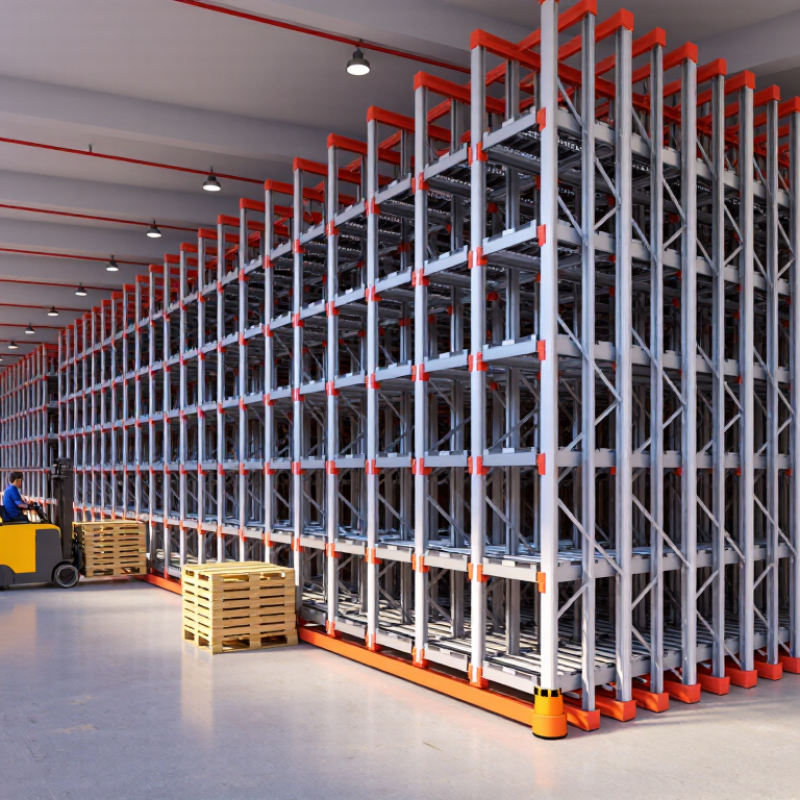
Push back racking is a storage system designed for Last-In, First-Out inventory control. Each lane holds several pallets on inclined rails or nested carts. A forklift loads the newest pallet from the aisle, pushing older pallets deeper into the lane. When the front pallet is removed, gravity moves the next pallet forward. This creates a clear LIFO sequence: the last pallet loaded is normally the first pallet retrieved.
The system works well for products with consistent batch types, such as seasonal materials or packaged goods with defined storage dates. Operators should check pallet dimensions, lane capacity, and load ratings before installation. Uneven pallets can stop on the rails. Damaged pallets can also create serious handling risks. Clear labels help workers identify the active lane and prevent accidental mixing. Physical inspections should include rails, carts, frames, and pallet stops.
Push back racking saves aisle space, but it does not suit every inventory policy. Products requiring strict First-In, First-Out rotation may be poorly matched with LIFO storage. A rushed operator might load a different product into the wrong lane, weakening the system’s logic. That weakness is easy to overlook. Reviewing movement records and observing forklift practices can reveal these errors. In practice, the best layout balances storage density with safe access, accurate identification, and realistic worker habits.
Push back racking stores pallets on inclined carts or rails. Each lane is loaded and retrieved from the same aisle, so the last pallet loaded is normally the first pallet retrieved, following the LIFO principle. The chart shows how pallet positions increase as the lane depth increases from two to six pallets.
Push back racking can support a LIFO inventory system when storage depth matches product behavior. Before selecting it, study six months of receipts, shipments, and stock adjustments. Group pallets by SKU, lot, weight, and expiry risk. LIFO works best when the newest pallet enters the front lane and the oldest remains behind it. That assumption can fail when products require date-based rotation. Measure pallet height, width, and actual load weight, not catalogue estimates. Record the tallest load. Include damaged packaging in the review.
Tips: Map daily pallet movements during busy shifts. Count emergency relocations. Mark the clear aisle width on the floor. Leave room for forklift turning and operator visibility. A storage plan that fits on paper may feel cramped in practice. Ask operators to test one lane before full installation. Their experience often reveals blind spots in a spreadsheet.
Calculate required lanes from peak inventory, not average inventory. Separate reserve stock from picking stock, and confirm whether each pallet can be reached without unloading another. Check floor capacity, ceiling clearance, sprinkler spacing, and rack protection needs with a qualified engineer. Train operators on speed limits, load placement, and inspection routines. Keep records of bent frames and uneven rollers. Small defects become costly interruptions. I have seen teams overestimate capacity because empty space looked usable. Recheck the design after one month of real movements; the first plan is rarely perfect.
When designing a push-back rack layout for LIFO inventory, begin with product flow. Place newer pallets at the loading face and retrieve the oldest accessible pallet last. Start with accurate measurements. Measure twice.
Record pallet length, width, height, and weight, including packaging. A three- or four-pallet-deep lane may improve storage density, but excessive depth can slow retrieval. Leave enough clearance for pallet overhang, rack movement, and forklift operation. An aisle that looks spacious on paper may feel tight during a busy shift. That detail deserves a real test.
Select equipment according to the load, not only the available floor space. Use rails or carts rated above the heaviest expected pallet weight. Every beam, upright, and safety stop must match the rack design. Forklift dimensions also affect aisle width and working height. Check turning radius with a loaded vehicle. Load labels should remain visible from the operating aisle. Operators need clear capacity information.
A practical layout separates fast-moving products from slow-moving stock. Keep fragile or unstable loads in shallower lanes when possible. During installation, verify level floors and anchor points with a qualified professional. I once underestimated pallet variation; identical product codes did not mean identical dimensions. That mistake reduced usable depth. Review the layout after several operating weeks. Small adjustments may reveal a better balance between density, access, and safe handling.
Push-back racking supports a clear last-in, first-out (LIFO) workflow. Each lane holds pallets on nested carts or rollers, with the newest pallet entering from the front. The operator pushes earlier pallets deeper into the lane. Keep one product code and one batch type per lane whenever possible. Mixing labels creates costly retrieval mistakes.
Loading requires controlled speed and centered pallet placement. Check pallet condition, load weight, and lane capacity before entry. A damaged pallet should not enter. The U.S. Occupational Safety and Health Administration requires stable storage and clear aisles under 29 CFR 1910.176. That rule is basic, but often overlooked. According to the MHI 2024 Annual Industry Report, 83% of respondents consider supply-chain innovation important. Still, better equipment cannot correct poor slotting or weak inspection habits.
Retrieval follows the reverse sequence. Remove the front pallet first, then allow the next pallet to advance safely. Confirm the license plate, product code, and quantity before dispatch. WERC’s DC Measures reports consistently treat inventory accuracy as a core warehouse benchmark, often near 99% for high-performing operations. That target deserves caution. A real site may experience exceptions during shift changes, rushed replenishment, or unclear labels. Record every movement in the warehouse system, and audit lanes regularly. A simple lane map near the aisle can prevent confusion. Yet, even experienced teams should test the LIFO process with a small live trial before expanding it.
Push-back racking suits LIFO inventory systems because operators load and retrieve pallets from one aisle. Each new pallet pushes the previous one deeper into the lane. This saves floor space, but it also hides aging stock. Clear lane labels and product-family rules are essential. The strongest control is a location-level inventory record, updated after every movement. MHI’s 2024 Annual Industry Report identified inventory and network optimization as major investment priorities for supply-chain professionals. That finding supports better scanning, not blind automation.
Safety must shape the layout. OSHA estimates that powered industrial trucks cause about 35,000 serious injuries annually in the United States. Push-back lanes can increase collision risk when forklifts enter too quickly or loads are poorly centered. Use trained operators, visible speed limits, pallet-quality checks, and scheduled rack inspections. Keep damaged pallets out. A small defect can become a falling-load event. The weak point is often human judgment.
Performance depends on disciplined measurement. Track retrieval time, lane utilization, mispicks, damaged pallets, and inventory age. Compare actual LIFO movement with the warehouse system each shift. Measure it weekly. If a lane stays full for months, the product may not belong in a LIFO design. A perfect layout is rarely perfect for long. Seasonal demand, mixed pallet sizes, and rushed replenishment can quietly reduce capacity. Review beam condition, guide rails, and load limits with a qualified storage-equipment professional, rather than relying only on installation drawings.
It suits products where newer pallets should enter the front and older pallets remain behind. Date-sensitive products may need another rotation method. LIFO is not always suitable.
Review six months of receipts, shipments, and stock adjustments. Group pallets by SKU, lot, weight, and expiry risk. Peak inventory matters more than average inventory.
Measure actual pallet height, width, and load weight. Record the tallest load, including damaged packaging. Catalogue estimates can mislead.
Map pallet movements during busy shifts and count emergency relocations. Mark aisle widths and forklift turning areas on the floor. Test one lane. Operator feedback may reveal spreadsheet blind spots.
Keep one product code and batch type in each lane whenever possible. Mixed labels can cause retrieval mistakes. Separate reserve stock from picking stock.
Check pallet condition, load weight, lane capacity, and centered placement. A damaged pallet should not enter the lane. Use controlled forklift speed.
Remove the front pallet first, then let the next pallet advance safely. Confirm the product code, license plate, and quantity before dispatch. Record every movement in the warehouse system.
Verify floor capacity, ceiling clearance, sprinkler spacing, aisle width, and rack protection needs. Train operators on speed limits, load placement, and inspections. Small defects matter.
Inspect bent frames, uneven rollers, unclear labels, and repeated emergency relocations. Review the design after one month of real movements. The original plan may fail.
Push-back racking is a compact storage solution designed to support Last-In, First-Out (LIFO) inventory management. Why is push-back racking ideal for LIFO inventory systems? Its inclined rails and nested pallet positions allow operators to load pallets from the front, pushing earlier loads deeper into the lane while keeping the newest pallet immediately accessible. This design improves space utilization, reduces unnecessary travel, and makes it easier to manage products with similar characteristics or predictable turnover patterns.
An effective system begins with an assessment of pallet dimensions, load weights, inventory volume, turnover rates, and available warehouse space. The rack layout and handling equipment should then be selected to provide safe access and efficient movement. Operators must load pallets in sequence, confirm stable placement, and retrieve the front pallet before accessing those behind it. Regular inspections, accurate stock records, clear labeling, and performance reviews help maintain safety, inventory accuracy, and consistent LIFO operation.

Lush Rack