Rack safety netting is a practical control for warehouses where pallets, cartons, and loose materials are stored above busy work areas. A single damaged carton can fall through an open rack bay. It may strike a worker, block an aisle, or damage nearby equipment. The risk becomes more noticeable when forklifts operate close to rack faces. Small impacts can also weaken the system over time.
The key question is: What safety netting is required for warehouse rack back-of-rack protection? The answer depends on rack design, load weight, pallet condition, aisle activity, and the distance between storage and protected areas. A qualified rack specialist should assess these conditions before selecting mesh strength, fixing points, and panel dimensions. The netting must fit the rack without interfering with beams, sprinklers, inspections, or pallet movement. It should remain secure after routine handling.
Good protection is not just about installing a net. Inspectors should check torn mesh, loose fasteners, bent uprights, and unapproved modifications. Look closely after forklift contact. Even minor damage matters.
It is not a perfect shield.
Rack netting cannot correct overloaded beams, unstable pallets, poor loading practices, or damaged frames. That limitation is easy to overlook. A reliable warehouse program combines suitable netting with rack inspections, operator training, clear load limits, and prompt repairs. Recommendations should follow the manufacturer’s instructions, site risk assessment, and applicable local safety guidance. When these details are treated seriously, back-of-rack protection becomes a dependable part of warehouse safety rather than an afterthought.
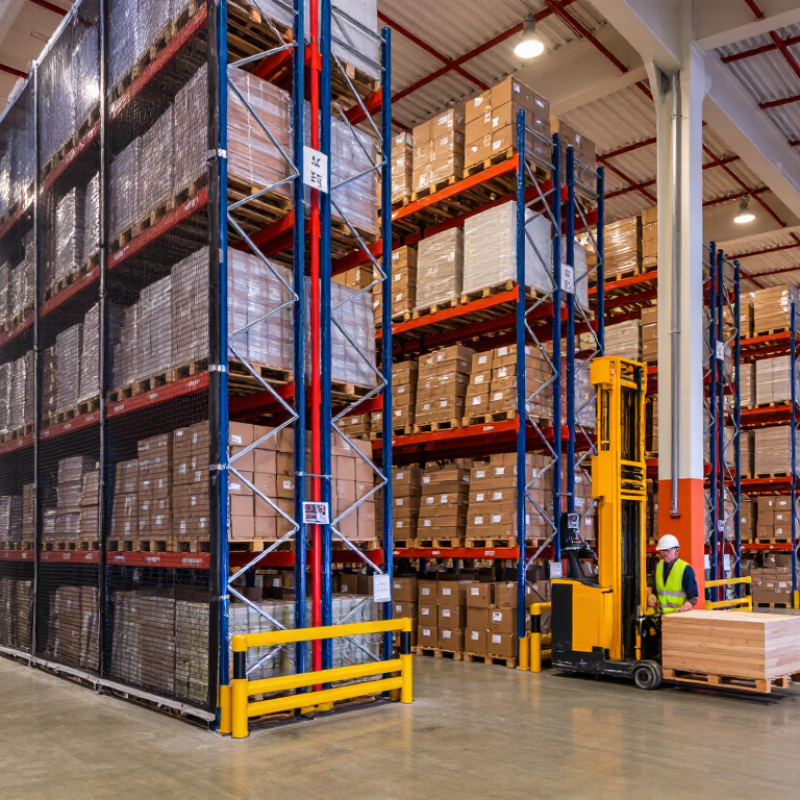
Rack safety netting is a flexible barrier attached to warehouse racking. It helps prevent cartons, pallets, and loose items from falling into aisles or work areas. Unlike solid panels, the net allows visibility, airflow, and light through the storage bay. It is usually made from high-strength woven material, with secure edges and fixing points.
The net works by absorbing and spreading impact energy. When a stored item pushes against it, the mesh and fittings share the load across several rack positions. This reduces the chance of objects passing through gaps. However, netting is not a substitute for correct loading. Pallets still need stable placement, suitable rack beams, and clear load information. A trained assessor should check the rack structure, fixing method, mesh condition, and expected impact forces. Small gaps matter. Even careful teams may miss damaged stitching or loose connections during busy shifts.
Tips: Match the net strength to the stored goods and rack height. Keep heavy items on lower levels whenever possible. Inspect the mesh after impacts, forklift contact, or building changes. Look closely at corners and attachment points. Replace damaged sections promptly. Records should include inspection dates, observed defects, and corrective actions. Review the arrangement when product sizes change, because yesterday’s safe setup may not fit today’s inventory.
Why Is Rack Safety Netting Needed in Warehouses?
A loose carton can fall through an open rack bay within seconds. Rack safety netting helps contain pallets, boxes, and damaged goods before they reach walkways. It is especially valuable behind storage positions facing forklift routes, packing stations, and pedestrian aisles. The U.S. Occupational Safety and Health Administration estimates that forklifts cause about 85 fatal accidents and 34,900 serious injuries each year. Not every incident involves falling stock, but uncontrolled loads increase the danger around moving equipment.
Netting also helps prevent partial pallet collapse. A cracked board, uneven load, or careless placement can push products beyond the beam line. Small items may fall first. Larger loads can follow. The Health and Safety Executive identifies workplace transport as a major source of fatal injuries in Great Britain, reinforcing the need to separate people from stored materials and vehicle movements. Netting is not a substitute for rack inspections, impact protection, or trained operators. That mistake still occurs.
Effective protection depends on correct mesh strength, attachment points, and clearance behind the load. Inspectors should look for torn sections, loose fasteners, bent uprights, and overloaded beams. The Rack Manufacturers Institute recommends regular inspections and immediate control of damaged rack components. In practice, a net can look intact while its fixings have weakened. That detail deserves more attention. Warehouses should also review changing pallet sizes, forklift speeds, and aisle traffic, because yesterday’s protection may not suit today’s risks.
Why Is Rack Safety Netting Needed in Warehouses?
Rack safety netting helps prevent cartons, pallets, and loose items from falling into work areas. It also protects people moving below elevated storage levels. The right netting type depends on rack design, load weight, aisle traffic, and inspection routines.
Back-of-rack netting is common where stored goods may slide through the frame. It creates a protective barrier without blocking visibility. Side netting can protect exposed rack ends near walkways or vehicle routes. Some systems use mesh panels for greater rigidity, especially around busy loading zones. Flexible nets suit irregular storage layouts and can absorb limited impact energy. However, they should not replace proper load placement or damaged rack repairs.
Material choice affects service life. High-strength synthetic fibers are lightweight, flexible, and resistant to moisture. They work well where frequent access is necessary. Steel wire mesh offers stronger physical resistance and better shape retention. It may suit heavier goods or areas with repeated handling contact. Coated steel can improve corrosion resistance in damp environments, though coatings can wear at fixing points. Inspect these areas closely.
Details matter. Openings must be small enough to retain expected items. Fixings should match the rack structure and anticipated forces. Installation records and routine checks support reliable performance. No system is perfect. Teams sometimes overlook torn edges after moving a rack. That small mistake can become serious. A practical inspection should check tension, fasteners, abrasion, corrosion, and changes in stored loads.
Key Types and Materials of Rack Safety Netting
Rack safety netting helps prevent pallets, cartons and loose products from falling through or behind warehouse racking, reducing the risk of injury, product damage and blocked aisles.
Common netting types include back-of-rack netting, side netting, pallet-stop netting and overhead protection. The appropriate design depends on rack layout, load characteristics, fall height and local safety requirements.
The chart compares the typical density of widely used netting materials. Density is a material property, not a direct measure of safety performance. Final selection should also consider tensile strength, mesh size, abrasion resistance, UV exposure, fire requirements and compatibility with the racking system.
Selecting the right rack safety netting begins with the warehouse layout, not the product label. Measure rack height, bay width, pallet depth, and the expected fall zone. The net should cover openings without blocking forklift movement or sprinkler access. Small measurement errors can create large gaps.
Check the required load capacity with the rack manufacturer’s data or a qualified engineer. Consider pallet weight, falling height, impact force, and the net’s attachment points. A fine mesh may stop small cartons, while heavier pallets need reinforced systems. Material choice also matters. Humid, cold, dusty, or outdoor areas may require different coatings and construction. Ask for test documents, installation guidance, and traceable product specifications. Do not rely on appearance alone.
A common shortcut is choosing the lowest-cost netting. It sounds efficient, but it may weaken under repeated impacts. Inspect stitching, hooks, brackets, and edge tension before installation. The net should remain secure when pallets move nearby. It should also be easy to remove for stock checks and repairs. Even experienced teams can miss damaged fixings behind stored goods. Create a simple inspection record with dates, locations, and photographs. Review it after layout changes. The first selection may not be perfect, and that is worth admitting. Warehouse conditions change. Good netting decisions must change with them.
Rack safety netting prevents cartons and loose items from falling through storage rack backs or sides. Its value depends on correct installation, not merely the mesh itself. Before fitting, a competent warehouse professional should check rack type, beam levels, load patterns, aisle clearance, and nearby work areas. The net must match the expected impact risk and remain clear of sprinklers, lights, and access routes. Secure every panel with suitable fixings, without drilling into structural members unless approved by the rack designer. Leave no sharp wire ends. A small gap can become a serious escape path.
Inspection should begin after installation and continue at a defined frequency based on traffic, load movement, and site risk. Look for torn mesh, bent frames, loose fixings, corrosion, missing clips, and contact damage from forklifts. Check whether stored goods press against the netting. They should not. A trained inspector should record the location, defect type, photographs, and corrective action. Immediate isolation may be sensible when damage threatens falling-object protection. Waiting for a scheduled review is not always defensible.
Maintenance teams should replace damaged sections with compatible components, then verify tension and attachment points. Do not tie off a torn panel and treat the repair as permanent. Clean dust carefully, because heavy buildup can hide corrosion or cuts. Reinspect after rack alterations, impacts, unusual loading, or nearby construction. Keep inspection records accessible and review repeated defects for patterns. In practice, workers may overlook upper corners because they are difficult to see. A suitable access method is safer than guessing from floor level. The process is not perfect; human attention still needs checking.
| Control Area | Requirement or Practice | When to Apply | Acceptance Criteria | Corrective Action |
|---|---|---|---|---|
| Purpose | Install safety netting on the exposed sides and backs of storage racks where falling pallets, cartons, or loose items could injure people or damage equipment. | After a documented workplace risk assessment identifies a falling-object hazard. | The netting provides continuous protection across the identified opening and does not create new access or handling hazards. | Review the risk assessment and extend, reposition, or replace the netting as necessary. |
| Risk Assessment | Assess rack height, load type, pallet condition, aisle traffic, forklift activity, nearby workstations, pedestrian routes, and the likelihood of items falling through or over the rack. | Before installation, after a layout change, and after a serious incident or near miss. | The assessment identifies the required net location, dimensions, attachment method, and expected impact conditions. | Do not install a standard net without confirming that its capacity and configuration suit the hazard. |
| Product Selection | Use purpose-designed industrial safety netting with documented load performance, suitable mesh size, UV resistance, and compatibility with the rack structure. | Before procurement or replacement. | Product documentation states intended use, installation method, working limits, and inspection requirements. | Quarantine products with missing documentation, unknown capacity, or visible deterioration. |
| Rack Compatibility | Confirm that fixings do not weaken uprights, beams, bracing, or other structural members. Do not drill or modify load-bearing components unless approved by a competent rack designer or engineer. | During design and before installation. | The rack remains within its rated configuration, and fixings are approved for the rack type and expected loads. | Stop work and obtain competent technical advice if the proposed fixing could affect rack stability. |
| Installation Coverage | Cover the complete hazard zone, including gaps between rack bays, around exposed ends, and beneath areas where small items could fall. | At initial installation and whenever the rack layout changes. | No unprotected gap permits foreseeable products or packaging to pass through the protected area. | Reposition or add sections of netting; do not rely on temporary tying or loose overlapping material. |
| Fixings and Tension | Secure the net at the required perimeter points using approved fixings. Keep it properly tensioned without excessive slack, sharp projections, or contact with moving equipment. | During installation and after any impact or adjustment. | Fixings are complete and tight; the net remains attached under normal operating conditions and does not obstruct pallet movement. | Replace missing or damaged fixings and restore the designed tension before the area is returned to normal use. |
| Clearances | Maintain sufficient clearance from forklifts, pallets, conveyors, sprinklers, lighting, fire exits, and other services. | During design, installation, and every layout change. | The netting does not reduce required aisle width, block emergency equipment, or interfere with fire protection or material handling. | Adjust the installation and obtain a competent review where fire-safety or access requirements may be affected. |
| Initial Inspection | Inspect the completed installation for correct coverage, secure attachments, damage, clearances, and compatibility with the rack system. | Before the protected rack is put into service. | Installation matches the approved design and all defects are recorded and resolved. | Withhold approval until the installation is corrected and re-inspected. |
| Routine Visual Check | Check for cuts, holes, fraying, pulled knots, UV degradation, loose edges, displaced sections, damaged fixings, and contact with stored goods. | At least monthly and as part of routine warehouse safety checks; increase frequency in high-traffic areas. | No damage or condition exists that could reduce containment performance or cause the net to detach. | Tag and isolate defective sections, then repair or replace them according to the product instructions. |
| Post-Impact Inspection | Inspect the net, fixings, rack uprights, beams, bracing, and nearby pallets after a collision, dropped load, or suspected overload. | Immediately after the event and before the area is reused. | No structural damage, stretched net, failed attachment, or displaced load remains unassessed. | Restrict access, report the incident, unload affected locations if necessary, and obtain competent inspection. |
| Formal Rack Review | Include safety netting and its attachments in the warehouse storage-system inspection program conducted by a competent person. | At intervals required by local regulations, the risk assessment, and the storage-system inspection program. | Inspection records identify findings, risk level, responsible person, target date, and closure evidence. | Track findings to completion and escalate overdue high-risk defects. |
| Cleaning | Remove dust, packaging, labels, and other debris without cutting, burning, or using chemicals that degrade the net material. | During scheduled housekeeping and whenever contamination is observed. | Mesh openings remain clear and the material shows no chemical, heat, or mechanical damage. | Use only cleaning methods permitted by the product documentation; replace contaminated or degraded sections. |
| Repairs | Repair or replace netting and fixings only with approved materials and methods. Do not use unapproved knots, wire, tape, or improvised fasteners as permanent repairs. | Whenever a defect is identified. | The repaired section restores the intended strength, coverage, attachment, and clearance. | Remove from service if an approved repair cannot restore the original performance. |
| Load Management | Keep pallets stable, evenly positioned, and within the rack’s rated load limits. Safety netting must not be used to correct overloading, poor stacking, or damaged pallets. | During every storage and replenishment operation. | Loads are stable, correctly placed, undamaged, and within documented rack and pallet limits. | Remove unstable or damaged loads and correct the underlying storage practice. |
| Records and Training | Maintain installation drawings, product information, inspection checklists, repair records, incident reports, and training records. Train workers to report damage and keep loads away from the net. | At installation, during induction, and whenever procedures change. | Records are current, accessible, and assigned to named responsible persons. | Update missing records and retrain affected personnel before continued use. |
Note: Safety netting should be selected, installed, inspected, and maintained according to the site risk assessment, applicable workplace and fire-safety requirements, rack-system specifications, and the netting manufacturer’s instructions. It is a supplementary control and does not replace safe loading, rack protection, housekeeping, or forklift management.
It helps stop cartons, pallets, and loose items from falling into work areas. It also protects people below elevated storage levels.
It is installed behind racks when stored goods might slide through the frame. It provides a barrier while maintaining visibility.
Side netting protects exposed rack ends near walkways or vehicle routes. It can reduce falling-object risks beside busy aisles.
High-strength synthetic fibers are lightweight, flexible, and moisture resistant. Steel wire mesh offers stronger resistance and better shape retention.
Openings should be small enough to retain the expected stored items. A small gap can become a serious escape path.
Check rack design, beam levels, load patterns, aisle clearance, and nearby work areas. Keep the net clear of sprinklers, lights, and access routes.
Inspection frequency should reflect traffic, load movement, and site risk. Check after rack impacts, alterations, unusual loading, or nearby construction.
Look for torn mesh, bent frames, loose fixings, corrosion, missing clips, and forklift contact damage. Check upper corners carefully. They are easy to miss.
Replace damaged sections with compatible components, then verify tension and attachment points. Do not treat a tied torn panel as a permanent repair.
Record the defect location, damage type, photographs, and corrective action. Reviewing repeated defects can reveal weak installation or loading habits.
Rack safety netting is an important warehouse protection system designed to contain goods, pallets, and loose materials stored on elevated racking. By creating a secure barrier along the back or sides of rack structures, it helps reduce the risk of items falling into aisles, work areas, or pedestrian routes. This protection can help prevent injuries, product damage, equipment impact, and operational disruptions caused by falling objects or unstable loads.
The right netting depends on rack design, load size, mesh strength, environmental conditions, and the level of protection required. Common options include flexible synthetic mesh and heavy-duty systems made with reinforced materials. When evaluating what safety netting is required for warehouse rack back-of-rack protection, businesses should consider the stored products, rack height, potential impact forces, and surrounding traffic. Proper installation, regular inspections, and timely repairs are essential to maintain performance. Any damaged, loose, or overstretched sections should be addressed promptly, while routine checks should confirm that fixings, tension, and overall coverage remain secure.

Lush Rack